
Visitor and patient flow
Main entrances, emergency entrances, parking and wayfinding all affect how people arrive. A welcoming, consistent entry experience reduces confusion and stress.
Healthcare sites serve patients, families, clinicians and support staff at all hours. F360 Guards proposes site-specific security planning that is calm, discreet and respectful of clinical work, with roles defined in writing.
All services described on this page are proposed. Scope, availability, licensing and operational readiness are confirmed during review.
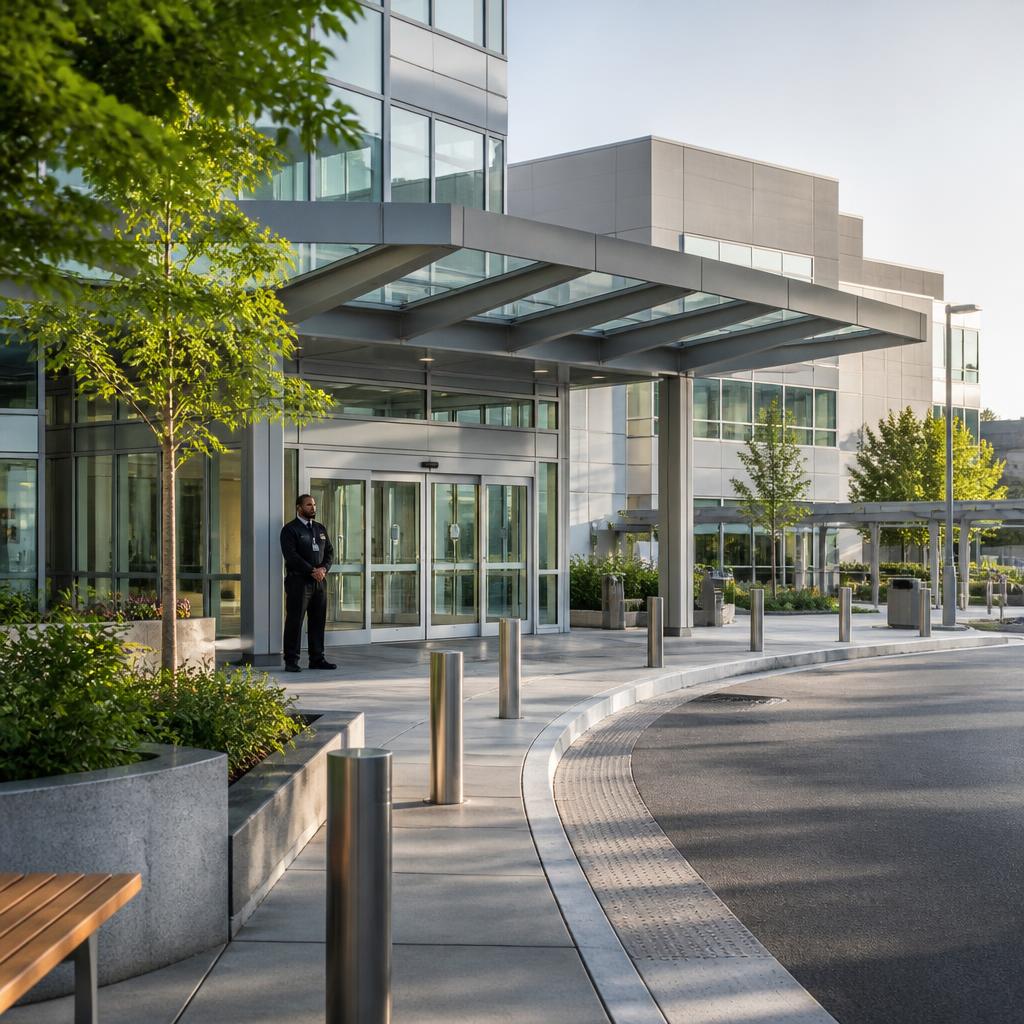
A healthcare environment mixes anxious visitors, vulnerable patients, controlled areas and round-the-clock operations. Security planning has to feel unobtrusive while remaining clear about who is responsible for what.
Main entrances, emergency entrances, parking and wayfinding all affect how people arrive. A welcoming, consistent entry experience reduces confusion and stress.
Pharmacies, behavioral health units, records rooms and other controlled spaces need access rules defined by the facility. Officers can support those rules only when they are written down.
Staff arriving and leaving at all hours create parking, lighting and escort considerations, especially overnight.
Officers are not clinicians. Planning must make clear that clinical decisions, patient care and clinical intervention belong to clinical teams.
Officers may see sensitive situations. Confidentiality expectations, documentation practices and report content should be defined with your privacy leadership. No compliance certification is claimed.
Emergency departments and after-hours entrances need clear contacts, communication paths and written follow-up.
Healthcare buyers typically weigh security against patient experience, regulatory expectations and the realities of clinical staffing. A good scope clarifies the posts and hours, the approach to sensitive areas, the line between security and clinical roles and the way incidents are documented and shared.
F360 Guards proposes to develop that scope with your facilities, risk and clinical leaders. Privacy practices, training standards, licensing and reporting systems would be verified and defined with you before any commitment. F360 Guards does not claim to be HIPAA certified and does not offer clinical services.
These are the kinds of support that may suit a healthcare property. Each is proposed for discussion and requires scope, licensing and operational confirmation.
Officer presence at main and designated entrances that supports your check-in and wayfinding procedures.
Officers who follow your written access rules at designated doors. Clinical and administrative leaders set the rules.
Presence and escort support as your policy defines, around shift changes and in parking areas.
Patrol timing and routes for campus buildings and grounds, documented for facility leadership.
Structured reports that follow your documentation and confidentiality guidance and go to named recipients.
Written instructions, reviewed with facility leadership, describing what officers do, and what they do not do, at each post.
Officers do not provide medical care, clinical restraint or patient-handling services, and F360 Guards does not claim healthcare compliance certification. Requested schedules are reviewed individually. No round-the-clock coverage is promised, and armed assignments are never assumed; any such discussion is subject to applicable licensing, client policy and operational confirmation.
Writing down who does what protects patients, staff and officers alike.
Your facility owns its emergency and incident procedures. The proposed plan would document who is notified, in what order and how a written, privacy-conscious record is shared afterward. No operational detail is published here.
Share your entrances, hours and priorities. A proposal request starts the conversation and does not commit either side.
This scenario is illustrative and was written for planning discussion. It does not describe an existing F360 Guards client, a completed project or a result. Goals below are prospective.
A hypothetical community hospital campus with a main entrance, an emergency department entrance, a medical office building, a staff parking structure and a pharmacy with restricted access.
This is the intended service delivery model. It describes how F360 Guards proposes to work, not a set of current guarantees.
A walk-through with facilities, risk and clinical leaders to understand entrances, controlled areas, shift patterns and visitor flow.
A written proposal setting posts, hours, boundaries and reporting lines for facility approval.
Officers briefed on facility expectations, privacy practices and communication style before they begin, with training standards confirmed in scope review.
Regular reviews with facility leadership to examine reports and adjust coverage.
Intended service delivery model. Not a statement of current capabilities.
Every item below is proposed. Availability, features and timing will be verified and confirmed before any operational commitment is made.
Proposed structured reports that follow facility documentation and privacy guidance, delivered to named recipients.
Proposed location-verified check-in and check-out for entrances and campus posts.
Proposed documented patrol activity for buildings, parking and grounds.
Proposed written instructions for each post, including clinical-boundary and confidentiality guidance.
Proposed supervisory review of coverage with a named contact for facility leaders.
Proposed periodic summaries for facilities, risk and administrative leaders.
Proposed shared standards for health systems with several sites.
Proposed capabilities. Availability will be verified before any public or contractual operational commitment. See all proposed technology
No. Officers support the security plan. Clinical decisions and patient care belong to clinical teams.
No certification is claimed. Privacy and documentation expectations would be defined with your privacy leadership and confirmed during scope review.
They would follow written access rules set by your facility. Leaders decide who is authorized, and exceptions are reported to designated contacts.
Schedules may be proposed around your hours. Availability is confirmed for each request and no round-the-clock coverage is promised.
Law enforcement and emergency services respond to emergencies. Officers would follow post orders and contact designated people and responders per your plan.
Your request is stored for review. Scope, availability and next steps need confirmation by the business. Email notification is not configured yet, so for time-sensitive needs please also call 888-360-5666.