Public areas and guest experience
Concourses, food courts, entrances and restrooms see constant movement. A professional, approachable presence shapes how safe and welcoming the property feels.
Shopping centers succeed when visitors feel comfortable and tenants feel supported. F360 Guards proposes site-specific security planning for public areas, parking and peak periods that works alongside property management and retailers.
All services described on this page are proposed. Scope, availability, licensing and operational readiness are confirmed during review.
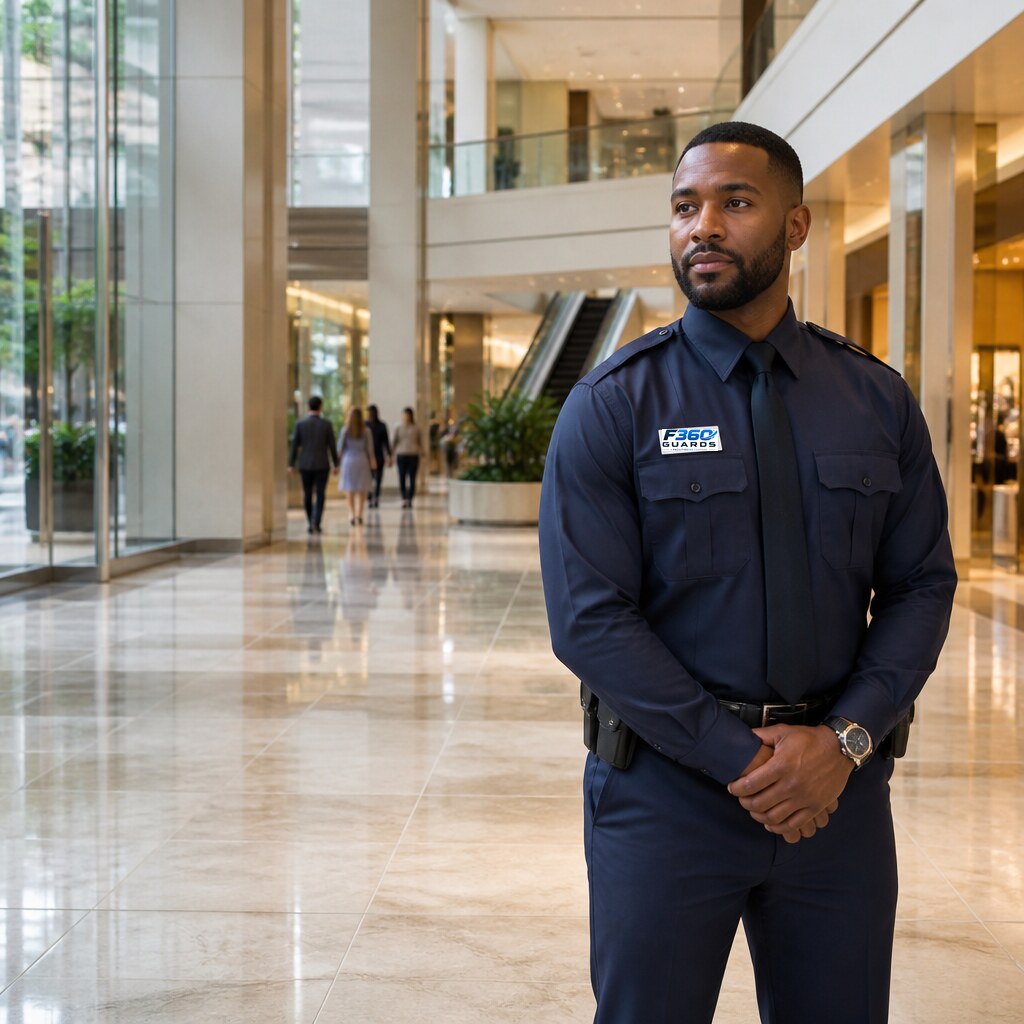
A mall or center is open to everyone while serving dozens of tenants with their own needs. Security has to feel hospitable to shoppers, useful to retailers and consistent for owners.
Concourses, food courts, entrances and restrooms see constant movement. A professional, approachable presence shapes how safe and welcoming the property feels.
Retailers run their own loss-prevention programs. Officers can support those teams by observing, reporting and communicating, within client policy and applicable law. Detention or apprehension outcomes are not promised.
Tenants need a clear point of contact, prompt follow-up and respect for their space. Consistent communication builds confidence in the property team.
Large lots and structures extend the property well beyond the doors. Coverage considers lighting, vehicle flow, pedestrians and after-hours use as defined by management.
Holidays, sales weekends and special events multiply visitors, traffic and incidents. Staffing and communication need a plan before the surge, not during it.
Loading docks, service corridors and closing routines have their own rhythms. Procedures must work for tenants, vendors and cleaning crews.
Retail property owners are asked to protect traffic and tenant satisfaction at the same time. A security scope that is too visible can unsettle shoppers; one that is too thin leaves tenants unsupported. The proposal should therefore state where officers are posted, what they do at each post, how they interact with tenant loss-prevention staff and how concerns are communicated to property management.
F360 Guards proposes to prepare that scope with your general manager and tenant coordination team, including a realistic peak-season plan. Licensing, staffing and reporting systems would be verified for your state and property before any commitment, and officers’ authority would be described in line with client policy and applicable law.
These are the kinds of support that may suit a retail property. Each is proposed for discussion and requires scope, licensing and operational confirmation.
Posted and roving presence at entrances and concourses, with a hospitality-first approach defined in post orders.
Communication with tenant loss-prevention teams, observation and documentation of reported concerns, within client policy.
A named supervisor contact and a structured way to report, track and close out tenant requests.
Patrol routes and timing for surface lots and structures, shaped around traffic patterns and management priorities.
Seasonal coverage plans for holidays and events, prepared with management well in advance.
Written reports to property management and scheduled reviews to refine coverage.
Officers do not replace retailer loss-prevention teams, and no detention, apprehension or recovery outcomes are promised. Requested schedules are reviewed individually. No round-the-clock coverage is promised, and armed assignments are never assumed; any such discussion is subject to applicable licensing, client policy and operational confirmation.
Property management, tenants, officers and police each have distinct responsibilities. Writing them down protects shoppers and staff.
Your property owns its emergency and incident procedures. The proposed plan would document who is notified, in what order and how written follow-up reaches management and tenants. No operational detail is published here.
Share your layout, tenants and peak periods. A proposal request starts the conversation and does not commit either side.
This scenario is illustrative and was written for planning discussion. It does not describe an existing F360 Guards client, a completed project or a result. Goals below are prospective.
A hypothetical regional enclosed shopping center with an anchor department store, a food court, a surface lot and a parking garage. Visitor volume rises sharply during the holiday season.
This is the intended service delivery model. It describes how F360 Guards proposes to work, not a set of current guarantees.
A walk-through with property management to understand public areas, tenants, parking, loading areas and peak patterns.
A written proposal setting posts, hours, tenant liaison and reporting lines for management approval.
Officers briefed on the property, tenants and guest-service expectations before they begin, with training standards confirmed in scope review.
Regular reviews with management to examine reports, tenant feedback and upcoming peak periods.
Intended service delivery model. Not a statement of current capabilities.
Every item below is proposed. Availability, features and timing will be verified and confirmed before any operational commitment is made.
Proposed structured reports for incidents and tenant concerns, delivered to named property contacts.
Proposed location-verified check-in and check-out for entrances, garage and lot posts.
Proposed documented patrol activity for concourses, lots and garages.
Proposed written instructions for each post, including guest-service and tenant-communication standards.
Proposed supervisory review of coverage with a named liaison for property management.
Proposed periodic summaries for property managers, owners and asset managers.
Proposed shared standards for owners with more than one center or retail location.
Proposed capabilities. Availability will be verified before any public or contractual operational commitment. See all proposed technology
Patrols may help by being visible and responsive, reporting concerns to management and communicating with tenant loss-prevention teams. Scope is confirmed during review.
No detention or apprehension outcomes are promised. Officers would observe, document and report, within client policy and applicable law, and law enforcement handles criminal response.
Seasonal coverage plans may be proposed in advance with property management. Staffing availability is confirmed for each request.
Parking-area patrol may be proposed, with routes and timing based on your property and priorities.
A shared set of standards with site-specific post orders may be proposed for multiple properties. Multi-site capability is confirmed during scope review.
Your request is stored for review. Scope, availability and next steps need confirmation by the business. Email notification is not configured yet, so for time-sensitive needs please also call 888-360-5666.